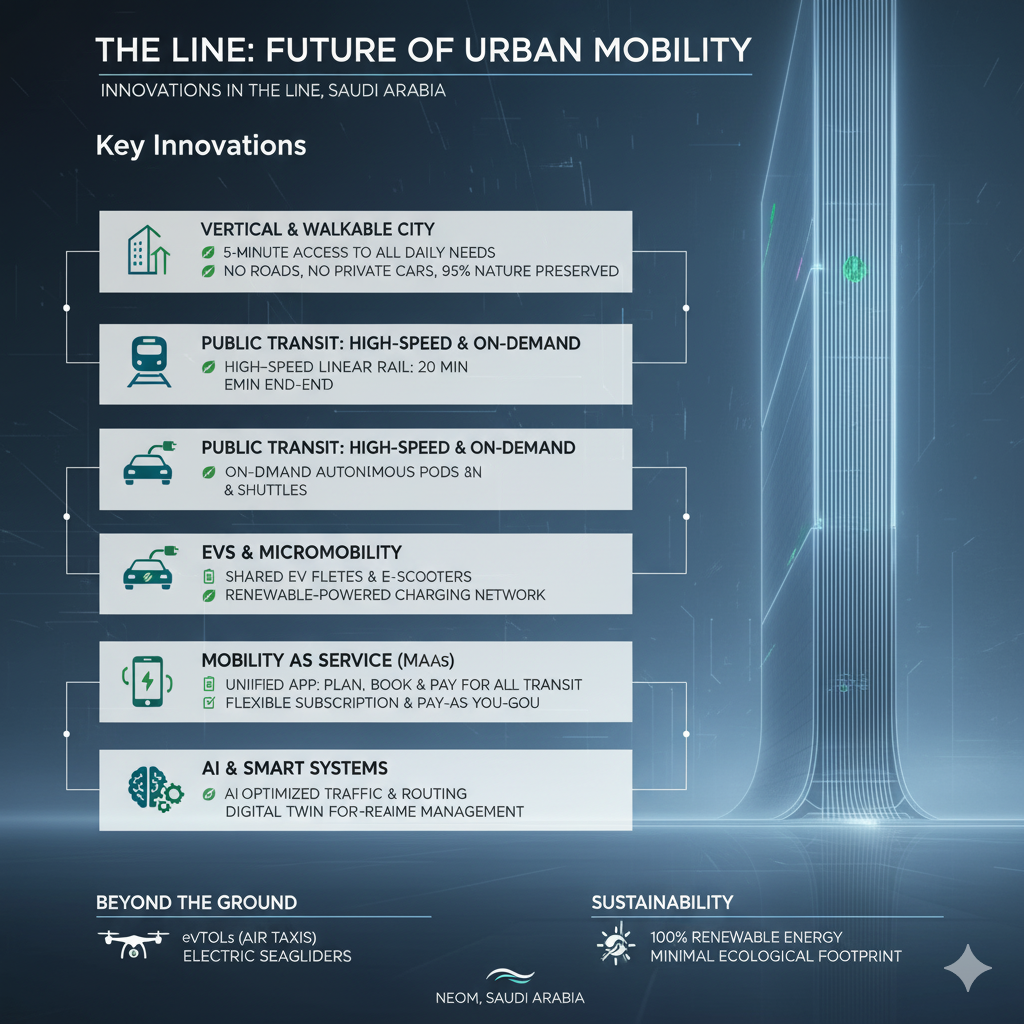

Saudi Arabia’s ambitious urban development project, The Line, is redefining the future of city living. As part of the NEOM initiative, The Line promises a revolutionary model of urbanism—one that prioritizes sustainability, human-centric design, and technological integration. Stretching 170 kilometers across the desert yet only 200 meters wide, The Line is envisioned as a vertically layered city that eliminates the need for cars, reduces environmental impact, and enhances quality of life. At its core, The Line is not just a city, it’s a blueprint for community well-being in the 21st century.
Walkability & Active Lifestyle
One of the most radical departures from traditional urban planning in The Line is its commitment to walkability. In most cities, sprawling layouts and car dependency hinder pedestrian movement and discourage physical activity. The Line flips this paradigm by designing a city where everything residents need—workplaces, schools, parks, and shops—is within a five-minute walk.
- Vertical Zoning: Instead of spreading out horizontally, The Line stacks its infrastructure vertically. This allows for seamless movement between residential, commercial, and recreational spaces.
- Pedestrian-first Design: Streets are replaced by green corridors and walking paths. With no cars or traffic congestion, residents can safely walk, jog, or cycle throughout the city.
- Integrated Fitness Infrastructure: Public spaces include outdoor gyms, running tracks, and wellness zones, encouraging an active lifestyle as part of daily routines.
By embedding movement into the fabric of the city, The Line promotes physical health, reduces stress, and fosters spontaneous social interactions.
Clean, Green & Car-Free Environment
The Line’s car-free design is not just a novelty—it’s a cornerstone of its environmental and public health strategy. Traditional cities are plagued by pollution, noise, and traffic fatalities. The Line eliminates these hazards through a zero-carbon transportation system and a commitment to renewable energy.
- High-Speed Transit Spine: A subterranean high-speed rail system connects the entire city, allowing residents to travel end-to-end in under 20 minutes.
- 100% Renewable Energy: Solar, wind, and hydrogen power the city, drastically reducing its carbon footprint.
- Green Architecture: Buildings are designed with passive cooling, green roofs, and energy-efficient materials to minimize environmental impact.
- Biodiversity Corridors: The city is surrounded by protected natural landscapes, with integrated green belts that support native flora and fauna.
This clean and green approach not only safeguards the planet but also enhances residents’ quality of life by reducing exposure to pollutants and creating serene, nature-infused environments.
Integrated Safety & Emergency Systems
Safety is a fundamental pillar of community well-being, and The Line leverages cutting-edge technology to create a secure urban environment. Rather than relying solely on traditional policing and emergency services, The Line integrates smart systems that anticipate and respond to threats in real time.
- AI-Powered Surveillance: Intelligent monitoring systems detect anomalies and alert authorities instantly, improving response times and reducing crime.
- Disaster Resilience: The city is engineered to withstand extreme weather, seismic activity, and other natural disasters through modular construction and adaptive infrastructure.
- Emergency Access Networks: Vertical mobility systems, including drones and autonomous elevators, ensure rapid access to any part of the city during emergencies.
- Community Safety Hubs: Strategically located centers offer first aid, mental health support, and crisis intervention services.
By embedding safety into the city’s DNA, The Line fosters a sense of trust and security that is essential for thriving communities.
Affordable, Modular & Diverse Housing
Housing in The Line is designed to be inclusive, adaptable, and future-proof. Unlike many megacities where affordability and diversity are sacrificed for luxury development, The Line aims to provide homes for all income levels and lifestyles.
- Modular Construction: Prefabricated housing units allow for rapid deployment and customization, reducing costs and enabling flexible layouts.
- Mixed-Income Communities: Residential zones are planned to include a blend of affordable, mid-range, and premium housing, preventing socioeconomic segregation.
- Smart Living Spaces: Homes are equipped with IoT devices that optimize energy use, monitor health metrics, and enhance convenience.
- Cultural Sensitivity: Housing designs reflect Saudi heritage while embracing global architectural trends, creating a sense of identity and belonging.
This inclusive housing strategy ensures that The Line is not just a city for the elite, but a home for diverse populations seeking opportunity and comfort.
Advanced Public Health Infrastructure
Health is more than the absence of illness—it’s a holistic state of physical, mental, and social well-being. The Line’s public health infrastructure is designed to support this broader vision through proactive care, digital integration, and community wellness.
- Telemedicine & AI Diagnostics: Residents have access to virtual consultations and AI-powered health assessments, reducing wait times and improving accuracy.
- Preventive Care Programs: Wellness initiatives, including nutrition counseling, fitness tracking, and mental health support, are embedded into daily life.
- Smart Hospitals: Medical facilities use robotics, data analytics, and precision medicine to deliver personalized treatment.
- Public Health Monitoring: Real-time data from wearable devices and environmental sensors help authorities track health trends and respond to outbreaks swiftly.
By shifting from reactive to preventive care, The Line empowers residents to take control of their health and live longer, healthier lives.
Cultural Venues & Community Hubs
Culture is the soul of a city, and The Line is designed to be a vibrant tapestry of artistic expression, social connection, and civic engagement. From museums to maker spaces, the city offers a rich array of venues that celebrate creativity and foster community.
- Distributed Cultural Nodes: Rather than centralizing cultural institutions, The Line disperses them throughout the city, making them accessible to all.
- Community Hubs: Multipurpose centers serve as gathering places for workshops, performances, and civic dialogue.
- Public Art & Installations: Interactive art pieces and digital murals enliven public spaces and reflect the city’s evolving identity.
- Global & Local Fusion: Cultural programming blends Saudi traditions with international influences, promoting cross-cultural understanding.
These spaces are more than entertainment—they’re catalysts for social cohesion, innovation, and emotional well-being.
Amenities & Economic Opportunities
A city cannot thrive without economic vitality, and The Line is engineered to be a magnet for talent, investment, and entrepreneurship. Its unique layout and digital backbone create fertile ground for new industries and inclusive growth.
- Distributed Workspaces: Co-working hubs and remote-friendly offices are integrated into residential zones, reducing commute times and boosting productivity.
- Digital Economy: Blockchain, AI, and cloud technologies underpin the city’s economic infrastructure, enabling seamless transactions and smart contracts.
- Local Markets & Retail: Small businesses and artisan markets are supported through micro-financing and community partnerships.
- Education & Upskilling: Lifelong learning centers offer training in emerging fields, ensuring residents can adapt to a rapidly changing job market.
By aligning economic opportunity with community needs, The Line fosters prosperity without sacrificing equity.
Conclusion: A New Paradigm for Urban Living
The Line is more than a futuristic city—it’s a living laboratory for reimagining how we inhabit space, interact with one another, and care for our planet. Its commitment to walkability, sustainability, safety, inclusivity, health, culture, and opportunity sets a new benchmark for urban development worldwide.
As cities around the globe grapple with climate change, inequality, and infrastructure decay, The Line offers a bold alternative: a place where technology serves humanity, where design nurtures well-being, and where community is not an afterthought but the foundation.
In the heart of the Saudi desert, a new vision is rising—one that may well inspire the cities of tomorrow.



