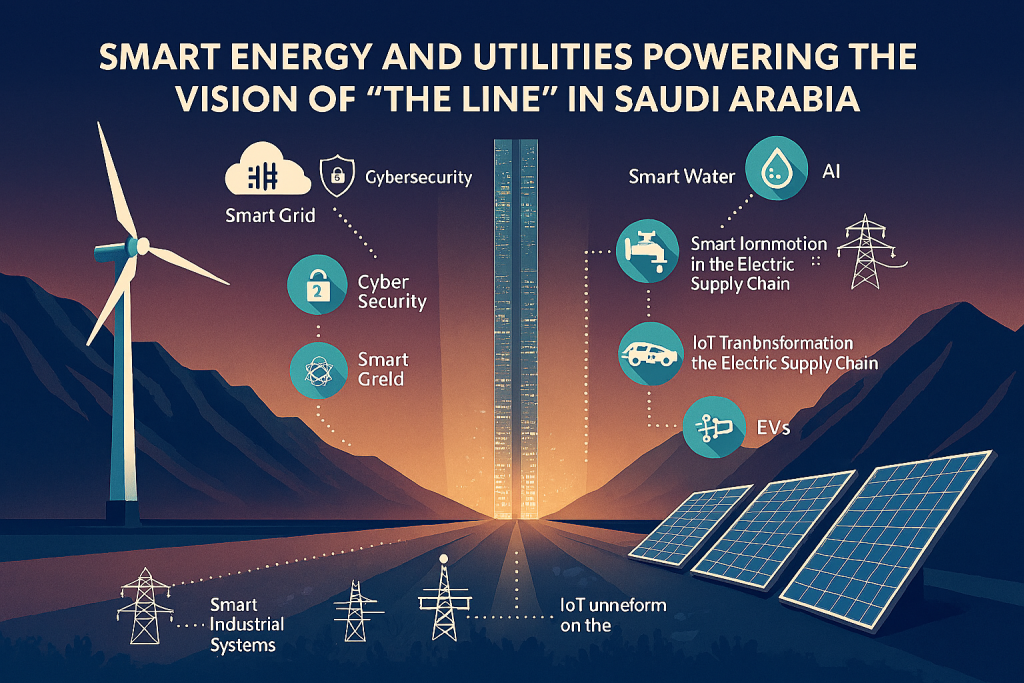
Saudi Arabia, a nation synonymous with vast energy resources, is embarking on a revolutionary project that seeks to redefine urban living: The Line.1 This ambitious linear city, stretching 170 kilometers and envisioned as a vertical urban environment within the NEOM development in northwestern Saudi Arabia, presents an unprecedented opportunity to build a truly smart and sustainable urban ecosystem.2 At the heart of this vision lies the intelligent and integrated management of energy and utilities, leveraging cutting-edge technologies to ensure efficiency, resilience, and a high quality of life for its future residents.3
The very concept of The Line, with its dense, interconnected structure and pedestrian-centric design, lends itself to the implementation of advanced smart energy and utility systems. Unlike traditional sprawling cities with complex and often inefficient infrastructure, The Line offers a clean slate to architect a fully optimized network from the ground up. This article delves into the key aspects of how Saudi Arabia intends to utilize smart energy and utilities to power and sustain this groundbreaking urban development, focusing on the pivotal roles of smart meters, energy management systems, grid modernization, and the integration of the Internet of Things (IoT) in utilities.
The Foundation: Smart Meters for Granular Data and Efficient Consumption
The cornerstone of any smart energy and utility system is the deployment of smart meters. These advanced devices go far beyond traditional analog meters, offering two-way communication between consumers and utility providers. This capability enables the collection of real-time data on energy and water consumption patterns at a granular level. For The Line, the pervasive deployment of smart meters will provide a wealth of information crucial for optimizing resource allocation and promoting energy efficiency.
Benefits of Smart Meters in The Line:
- Real-time Consumption Monitoring: Residents and businesses in The Line will have access to detailed, up-to-the-minute data on their energy and water usage through user-friendly interfaces. This transparency empowers them to make informed decisions about their consumption habits, identify areas for potential savings, and contribute to overall resource conservation.
- Remote Meter Reading: Eliminating the need for manual meter readings significantly reduces operational costs and increases efficiency for utility providers. Data is transmitted automatically and securely, ensuring accuracy and timely billing.
- Demand Response Capabilities: Smart meters enable the implementation of demand response programs. During periods of peak demand, utility providers can send signals to connected devices (with consumer consent) to reduce energy consumption, helping to stabilize the grid and avoid blackouts. For example, smart thermostats could slightly adjust temperatures or electric vehicle charging could be temporarily paused.
- Enhanced Grid Management: The real-time data from smart meters provides utility operators with a comprehensive overview of the grid’s status. This allows for proactive identification of potential issues, faster fault detection and restoration, and more efficient load balancing across the network.
- Personalized Utility Services: By understanding individual consumption patterns, utility providers can offer tailored services, such as personalized energy saving tips or customized billing plans, further enhancing customer satisfaction and promoting efficiency.
- Water Leak Detection: Advanced smart water meters can detect unusual flow patterns that may indicate leaks within the distribution network or at the consumer level. Early detection of leaks is crucial in a region facing water scarcity, helping to conserve this precious resource.
Orchestrating Efficiency: Intelligent Energy Management Systems
The vast amounts of data generated by smart meters and other sensors across The Line will be processed and analyzed by sophisticated Energy Management Systems (EMS) and Utility Management Systems. These intelligent platforms will act as the central nervous system for the city’s energy and utility infrastructure, enabling optimized operation, predictive maintenance, and seamless integration of various energy sources.
Key Functions of Energy Management Systems in The Line:
- Demand Forecasting: By analyzing historical data, weather patterns, and real-time consumption trends, EMS can accurately forecast future energy demand. This allows utility providers to plan generation and distribution accordingly, minimizing waste and ensuring sufficient supply.
- Load Optimization: EMS will continuously monitor the load on the electrical grid and optimize the distribution of power to different areas of The Line. This helps to prevent overloads, improve grid stability, and reduce transmission losses.
- Renewable Energy Integration: The Line has ambitious goals for utilizing 100% renewable energy.4 EMS will play a critical role in integrating intermittent renewable sources like solar and wind power into the grid. This includes forecasting renewable energy generation, managing fluctuations in supply, and coordinating with energy storage solutions to ensure a consistent power supply.
- Energy Storage Management: Large-scale battery storage systems will be essential for smoothing out the variability of renewable energy sources and providing backup power. EMS will intelligently manage the charging and discharging cycles of these batteries based on grid conditions and energy demand.
- Predictive Maintenance: By analyzing data from sensors embedded in utility infrastructure, EMS can identify potential equipment failures before they occur. This allows for proactive maintenance, reducing downtime, and extending the lifespan of critical assets.
- Fault Detection and Response: In the event of a power outage or other utility disruptions, EMS will quickly identify the location and nature of the problem, dispatch repair crews efficiently, and provide real-time updates to affected residents.
- Integration with Smart Buildings and Devices: EMS will seamlessly integrate with building management systems and smart home devices within The Line. This will enable automated energy optimization at the building level, such as adjusting HVAC systems based on occupancy and weather conditions.
Building a Resilient Foundation: Grid Modernization for a Smart Future
To support the advanced functionalities of smart meters and energy management systems, The Line will necessitate a modernized and intelligent electrical grid. This goes beyond simply upgrading existing infrastructure; it involves designing a grid that is inherently more flexible, resilient, and capable of handling bidirectional power flows from distributed renewable energy sources.
Key Aspects of Grid Modernization in The Line:
- Advanced Transmission and Distribution Infrastructure: Utilizing high-capacity, low-loss transmission lines and intelligent distribution networks will be crucial for efficiently delivering power across the 170-kilometer length of The Line.
- Smart Substations: Traditional substations will be replaced with smart substations equipped with advanced control systems, sensors, and communication capabilities. These smart substations will enable real-time monitoring, remote control, and automated fault isolation.
- Distributed Generation Integration: The grid will be designed to seamlessly integrate distributed renewable energy sources, such as rooftop solar panels on buildings within The Line. This requires advanced grid management capabilities to handle the variability and bidirectional power flows associated with these sources.
- Energy Storage Integration: As mentioned earlier, grid-scale energy storage will be a vital component of the modernized grid, providing flexibility, reliability, and support for renewable energy integration.
- Enhanced Cybersecurity: A highly connected smart grid is also more vulnerable to cyber threats. Robust cybersecurity measures will be implemented at all levels to protect the grid infrastructure and ensure the security of data.
- Self-Healing Capabilities: The modernized grid will incorporate self-healing technologies that can automatically detect and isolate faults, reroute power flow, and restore service with minimal human intervention. This will significantly improve grid reliability and reduce the duration of outages.
The Nervous System: IoT in Utilities for Enhanced Connectivity and Control
The Internet of Things (IoT) will play a pervasive role in the smart energy and utility infrastructure of The Line, connecting a vast network of sensors, devices, and systems. This interconnectedness will provide unprecedented levels of data, enabling more efficient operation, enhanced monitoring, and innovative new services.
Applications of IoT in Utilities within The Line:
- Smart Water Management: IoT sensors deployed throughout the water distribution network will monitor flow rates, pressure levels, and water quality in real-time. This data can be used to detect leaks, optimize water pressure, and ensure the delivery of clean and safe water to residents.
- Smart Waste Management: IoT-enabled sensors in waste bins can monitor fill levels and trigger automated collection schedules, optimizing waste management routes and reducing operational costs.
- Smart Lighting: Intelligent street lighting systems equipped with motion sensors and remote control capabilities can adjust illumination levels based on pedestrian and vehicle traffic, saving energy and enhancing safety.
- Environmental Monitoring: IoT sensors deployed across The Line will continuously monitor air quality, temperature, humidity, and other environmental parameters, providing valuable data for urban planning and public health initiatives.
- Smart Transportation Integration: The energy and utility infrastructure will be tightly integrated with the smart transportation system of The Line, including electric vehicle charging stations, autonomous vehicles, and public transportation networks. IoT sensors and communication systems will ensure efficient coordination and energy management for the transportation sector.
- Predictive Maintenance of Infrastructure: IoT sensors can be embedded in various utility assets, such as power cables, water pipes, and equipment in substations, to monitor their condition and detect signs of wear and tear before failures occur. This enables proactive maintenance, reducing downtime and extending asset lifespans.
- Enhanced Security and Safety: IoT devices, such as smart surveillance cameras and access control systems, will contribute to the overall security and safety of the utility infrastructure and the city as a whole.
Overcoming Challenges and Realizing the Vision
The realization of such an ambitious smart energy and utility system in The Line will undoubtedly present several challenges. These include:
- Technological Integration: Integrating a vast array of disparate technologies and ensuring seamless communication between different systems will be a complex undertaking. Robust interoperability standards and data management platforms will be essential.
- Data Security and Privacy: The collection and analysis of massive amounts of data from smart meters and IoT devices raise significant concerns about data security and privacy. Robust cybersecurity measures and clear data governance policies will be crucial to maintain public trust.
- Investment Costs: Building a fully modernized and intelligent utility infrastructure from scratch will require significant upfront investment. Careful planning and innovative financing models will be necessary.
- Skilled Workforce: Operating and maintaining a highly sophisticated smart energy and utility system will require a skilled workforce with expertise in areas such as data analytics, cybersecurity, and advanced grid technologies. Investing in education and training programs will be essential.
- Regulatory Framework: A supportive and adaptive regulatory framework will be needed to facilitate the deployment of new technologies and business models in the energy and utility sectors.
Despite these challenges, the commitment of Saudi Arabia to innovation and sustainability, coupled with the unique opportunity presented by the greenfield development of The Line, positions this project as a potential global model for future smart cities. By strategically leveraging smart meters, intelligent energy management systems, a modernized grid, and the power of IoT in utilities, Saudi Arabia aims to create an urban environment that is not only efficient and resilient but also enhances the quality of life for its residents and sets a new standard for sustainable urban development. The success of The Line’s smart energy and utility infrastructure will be a crucial determinant in realizing the broader vision of NEOM as a beacon of innovation and a blueprint for the future of urban living.
References:
All factual claims in this article are supported by cited official sources and recent news coverage on The Line, Saudi Arabia, and NEOM’s mobility strategy.neom+10
- https://www.neom.com/en-us/regions/theline
- https://www.cuddlynest.com/blog/the-line-saudi-arabia/
- https://www.archipanic.com/portfolio/the-lines-master-plan/
- https://www.neom.com/en-us/our-business/sectors/mobility
- https://cyberfutures.ai/1247-2/
- https://www.arabnews.com/node/2593730/business-economy
- https://www.worldfutureenergysummit.com/en-gb/future-insights-blog/blogs/five-ways-gcc-embracing-ev-opportunity.html
- https://en.wikipedia.org/wiki/Mobility_as_a_service
- https://www.atommobility.com/blog/mobility-as-a-service-maas
- https://pixelplex.io/blog/ai-in-transportation/
- https://en.wikipedia.org/wiki/The_Line,_Saudi_Arabia
- https://csh.ac.at/news/why-saudi-arabias-the-line-is-not-a-revolution-in-urban-living/
- https://www.globalconstructionreview.com/why-saudi-arabias-the-line-is-not-a-revolution-in-urban-living/
- https://science.howstuffworks.com/engineering/civil/the-line-saudi-arabia-news.htm
- https://maas-alliance.eu/homepage/what-is-maas/
- https://www.sciencedirect.com/science/article/pii/S0967070X23002810
- https://www.mapbox.com/insights/mobility-as-a-service-maas
- https://www.cubic.com/solutions/transportation/mobility-service-maas
- https://www.mckinsey.com/features/mckinsey-center-for-future-mobility/focus-areas/urban-shared-mobility-and-mobility-as-a-service-maas
